Awaiting pharmacist review. This page reports clinical trial results, and a licensed Canadian pharmacist has not read it yet. The sources for each number are listed at the foot of the page. It is not a basis for a treatment decision.
Retatrutide side effects are mostly stomach and bowel complaints: nausea, diarrhea, constipation and vomiting. That much it shares with every drug in its class. Two things deserve a closer look. A skin-sensation effect called dysesthesia shows up in every trial, and at the top dose more people quit than the weight-loss headlines suggest. Here is what four phase 3 trials recorded, dose by dose.
Where these retatrutide side effect numbers come from
Retatrutide is not approved in Canada or anywhere else. That means no product monograph exists, no official list of warnings, and no pharmacist handout. What we have is trial data, and it comes in two grades.
- Journal papers. TRIUMPH-1 appeared in the New England Journal of Medicine and TRIUMPH-2 in The Lancet, both on September 29, 2026. Outside doctors checked these before they ran.
- Company releases. Eli Lilly and Company published topline numbers for all four trials. They carry more side effect detail than the journal abstracts do, and nobody outside the company has reviewed them. I flag which grade each table uses.
One more caution. A trial rate tells you how often something was written down across thousands of monitored people. It is not your personal odds.
The most common retatrutide side effects, by dose
TRIUMPH-1 is the largest trial, with 2,339 adults followed for 80 weeks. These are the rates from Lilly's topline release.
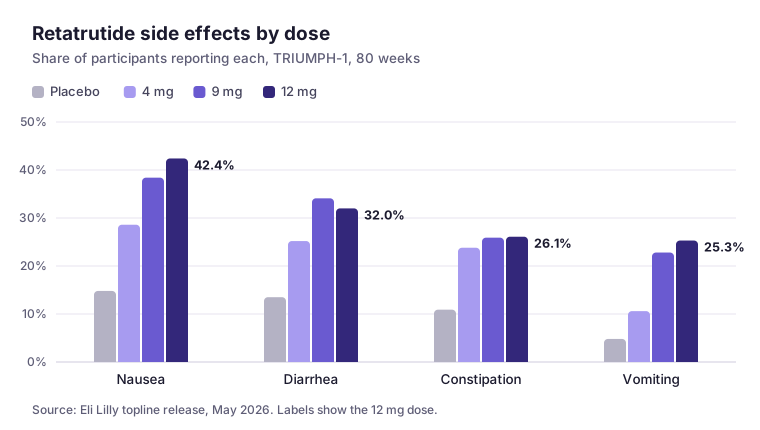
| Side effect | Placebo | 4 mg | 9 mg | 12 mg |
|---|---|---|---|---|
| Nausea | 14.8% | 28.6% | 38.4% | 42.4% |
| Diarrhea | 13.5% | 25.2% | 34.1% | 32.0% |
| Constipation | 10.9% | 23.8% | 25.9% | 26.1% |
| Vomiting | 4.8% | 10.6% | 22.8% | 25.3% |
Read the placebo column first. About one person in seven on a dummy injection reported nausea too. The drug's own share is the gap between the columns: roughly 28 extra people in every 100 at 12 mg.
Do retatrutide side effects get worse at higher doses?
Mostly, but not in a straight line. Let's break it down.
- Nausea and vomiting climb with every step. Vomiting more than doubles between 4 mg and 9 mg, from 10.6% to 22.8%.
- Diarrhea peaks in the middle. It was 34.1% at 9 mg and 32.0% at 12 mg.
- Constipation barely moves. It sat between 23.8% and 26.1% across all three doses.
TRIUMPH-4 tested only the two higher doses, in 445 adults with knee osteoarthritis, and it tells the same story from a different group of people.
| Side effect, TRIUMPH-4 | Placebo | 9 mg | 12 mg |
|---|---|---|---|
| Nausea | 10.7% | 38.1% | 43.2% |
| Diarrhea | 13.4% | 34.7% | 33.1% |
| Constipation | 8.7% | 21.8% | 25.0% |
| Vomiting | 0.0% | 20.4% | 20.9% |
| Decreased appetite | 9.4% | 19.0% | 18.2% |
My read: the jump from 9 mg to 12 mg buys little extra stomach trouble. The jump from 4 mg to 9 mg is where it shows up. If retatrutide reaches pharmacies, that middle step is the one I would ask a prescriber about.
Dysesthesia: the retatrutide side effect most people have not heard of
Dysesthesia means an abnormal, unpleasant skin sensation. People describe tingling, burning, or skin that feels sore to a light touch. Most people have never met the word. It appears in every retatrutide phase 3 trial that has reported a rate so far, often enough at the higher doses to plan for.
| Dysesthesia | Placebo | 4 mg | 9 mg | 12 mg |
|---|---|---|---|---|
| TRIUMPH-1 | not reported | 5.1% | 12.3% | 12.5% |
| TRIUMPH-2 | 1% | 4% | 6% | 7% |
| TRIUMPH-4 | 0.7% | not tested | 8.8% | 20.9% |
The spread is wide. One trial puts the 12 mg rate at 20.9%, another at 7%. The groups differ, and so does how each trial asked about it, so I would not average them.
Lilly says these events were mostly mild to moderate, that the majority cleared up while people stayed on the drug, and that few stopped treatment because of them. That is the company's summary. The peer-reviewed safety tables will show whether it holds. Lilly's TRIUMPH-1 release also named urinary tract infections alongside dysesthesia, without a rate in the copy I checked.
How many people stopped retatrutide because of side effects
This is the number I trust most. It measures whether side effects were bad enough to outweigh the benefit, not just whether they happened.
| Stopped for an adverse event | Placebo | 4 mg | 9 mg | 12 mg |
|---|---|---|---|---|
| TRIUMPH-1 | 4.9% | 4.1% | 6.9% | 11.3% |
| TRIUMPH-2 | 5% | 4% | 12% | 8% |
| TRIUMPH-3 | 4.8% | not tested | not reported | 13.5% |
| TRIUMPH-4 | 4.0% | not tested | 12.2% | 18.2% |
Three things stand out to me.
- At 4 mg, almost nobody extra quit. At 4 mg, fewer people stopped for an adverse event than on placebo.
- TRIUMPH-4 is the outlier. Lilly says these rates tracked with starting BMI and include people who stopped because they felt they had lost too much weight. Among participants with a BMI of 35 or higher, the rates were 8.8% and 12.1%, against 4.8% on placebo.
- TRIUMPH-2 breaks the pattern. More people stopped on 9 mg than on 12 mg. This row counts permanent stops for an adverse event or death. Investigators judged every death unrelated to the study drug.
Put the TRIUMPH-1 figure the other way round: about 89 in every 100 people who started the top dose did not stop because of an adverse event.
Heart rate and blood pressure on retatrutide
Trials of this drug class track heart rate, and the phase 2 trial, published in the New England Journal of Medicine in 2023, reported on it directly. Heart rate rose with dose, peaked at 24 weeks and declined after that.
TRIUMPH-2 adds a blood pressure finding. Low blood pressure was reported in 1%, 5% and 6% of people on the three doses, against <1% on placebo. Losing weight tends to bring blood pressure down. Anyone taking blood pressure pills would want those doses reviewed as the weight came off.
Retatrutide side effects in people with type 2 diabetes
TRIUMPH-2 enrolled 1,152 adults with type 2 diabetes. The Lancet abstract gives two stomach and bowel rates.
| Side effect, TRIUMPH-2 | Placebo | 4 mg | 9 mg | 12 mg |
|---|---|---|---|---|
| Diarrhea | 13% | 27% | 34% | 34% |
| Nausea | 8% | 14% | 21% | 28% |
Nausea at 12 mg was 28% here, against 42.4% in TRIUMPH-1. It is tempting to say people with diabetes tolerate the drug better. Two trials with different participants cannot prove that, so treat it as a question, not a finding.
The abstract also reports seven deaths across the trial: two on 4 mg, three on 9 mg, one on 12 mg and one on placebo. Investigators judged all of them unrelated to the study drug. The trial followed more than a thousand adults with diabetes, average age 55, for a year and a half, so a few deaths in each arm are not a surprise by themselves.
Is retatrutide harder on the stomach than Zepbound or Wegovy?
You will see charts online that line up retatrutide's nausea rate beside tirzepatide's and declare a winner. Ignore them. Each number comes from a different trial, with different people, different dose schedules and different ways of counting.
A fair answer needs one trial that gives both drugs to similar people. TRIUMPH-5 does that against tirzepatide, in 800 adults with obesity. It is still running. The registry estimates its main data collection ends in November 2026, and nothing has been reported.
When retatrutide side effects tend to show up
The published abstracts do not chart side effects week by week. The trial designs still give two clues about timing.
- The climb is where designers expected trouble. TRIUMPH-4 let doctors lower a dose for stomach and bowel side effects only while it was being stepped up. Once a participant reached the target dose, that option closed.
- A gentler start helped. The phase 2 trial compared two starting doses on the way to the same target. Beginning at 2 mg instead of 4 mg cut down the nausea and bowel complaints, though it did not remove them.
Put together, that points at the early months as the rough patch. It also explains why every later trial began low and went up in stages.
Questions about retatrutide side effects to bring to a pharmacist
You cannot ask these yet, because there is no authorized product to ask about. Keep them for the day there is one.
- Which dose is my target, and what happens if I cannot tolerate the step up to it?
- I take blood pressure or diabetes medicine. Which doses will need checking as I lose weight?
- What does dysesthesia feel like, and when should I call about it?
- What should I do if I vomit more than once after an injection?
What nobody knows about retatrutide side effects yet
- The official warnings. No regulator has reviewed the full safety file, so there is no list of who should not take it and no drug interaction section.
- Rare events. Several thousand participants is enough to measure nausea. It is not enough to pin down something that happens to one person in ten thousand.
- The long run. The longest phase 3 results cover 80 weeks. A heart and kidney outcomes trial in 10,000 adults is under way, and the registry estimates its main data collection ends in February 2029.
- Dysesthesia after stopping. Lilly says most cases resolved during treatment. What happens to the rest has not been published.
Side effects of retatrutide bought online are a different question
Every rate on this page describes a drug made by its developer and injected under medical supervision. None of them describe a vial ordered from a website. Health Canada's 2026 advisory on injectable peptides lists retatrutide by name and warns of infections, dosing errors, unlisted ingredients and contaminants. Our page on buying retatrutide in Canada covers what those products are and what the law says.
What this means if you are waiting for retatrutide in Canada
You cannot be prescribed retatrutide here, so none of this is something to act on today. It is useful for setting expectations. The honest summary: its stomach and bowel profile looks like the rest of its class, the top dose costs more dropouts than the lower ones, and dysesthesia is an item to ask about.
Next steps, if you want to keep reading. The doses behind these rates, and how slowly the trials stepped people up, are on our retatrutide dosage page. Where the drug stands with regulators is on the approval timeline. And if you are weighing a GLP-1 medicine that is authorized here now, a Canadian pharmacist can walk you through that drug's real monograph, which is something this page cannot offer for retatrutide.
Common questions
What are the most common retatrutide side effects?
Stomach and bowel complaints. In TRIUMPH-1, at the 12 mg dose, 42.4% of participants reported nausea, 32% diarrhea, 26.1% constipation and 25.3% vomiting. The placebo rates were 14.8%, 13.5%, 10.9% and 4.8%.
What is dysesthesia, and how often does retatrutide cause it?
Dysesthesia is an abnormal skin sensation, such as tingling, burning or soreness to light touch. Trials reported it in 8.8% of people on 9 mg and 20.9% on 12 mg in TRIUMPH-4, against <1% on placebo. Lilly described the events as mostly mild and said few people stopped treatment over them.
How many people stop retatrutide because of side effects?
In TRIUMPH-1, 11.3% of people on 12 mg stopped for an adverse event, against 4.9% on placebo. At 4 mg the rate was 4.1%, lower than placebo. TRIUMPH-4, a smaller trial in people with knee osteoarthritis, recorded 18.2% at 12 mg.
Does retatrutide raise your heart rate?
The phase 2 trial found that it did. Heart rate rose with dose, peaked at 24 weeks and declined after that. The phase 3 journal abstracts published so far do not give heart rate figures, so the long-run picture is still open.
Are retatrutide side effects worse than Zepbound or Wegovy?
Nobody can say from evidence yet. No finished trial has compared retatrutide with either drug. TRIUMPH-5, a head-to-head against tirzepatide, is still running, and the registry estimates its main data collection ends in November 2026.
Do these side effect rates apply to retatrutide bought online?
No. They describe a manufactured drug given under supervision in a trial. A vial sold online has not been assessed by Health Canada for what it contains, how much, or how clean it is, so nobody can tell you what it will do.
Sources
- Retatrutide, a Triple Hormone Receptor Agonist, for Treatment of Obesity. New England Journal of Medicine, September 2026.
- Retatrutide in adults with obesity and type 2 diabetes (TRIUMPH-2): a double-blind, parallel-group, randomised, placebo-controlled, phase 3 trial. The Lancet, September 2026.
- Triple-Hormone-Receptor Agonist Retatrutide for Obesity: A Phase 2 Trial. New England Journal of Medicine, June 2023.
- Lilly’s triple agonist, retatrutide, delivered powerful weight loss in pivotal Phase 3 obesity trial. Eli Lilly and Company, May 2026.
- What are the preliminary results with retatrutide from TRIUMPH-4 in participants with obesity or overweight and osteoarthritis?. Lilly Medical, Eli Lilly and Company, August 2026.
- Lilly’s triple agonist, retatrutide, successful in two additional Phase 3 obesity trials, delivering significant improvements in weight and A1C. Eli Lilly and Company, July 2026.
- A Study of Retatrutide (LY3437943) Compared to Tirzepatide (LY3298176) in Adults Who Have Obesity (TRIUMPH-5, NCT06662383). ClinicalTrials.gov, U.S. National Library of Medicine, July 2026.
- Think twice before injecting peptides bought online: unauthorized products can seriously harm you. Health Canada, April 2026.